10th February 2019
Over the years, I have heard wonderful things about this island from fellow travellers, and it has long been on my sceptic’s checklist to see whether any of the superlatives used truly apply. We arrived just before breakfast, but there was no chance of sleeping through our approach. Though the ship silently eased its way through a gap in the surrounding reef, this was to be a tendered anchorage within a flooded volcanic crater, and when the anchor chain was released from its shackles, the entire ship shuddered!
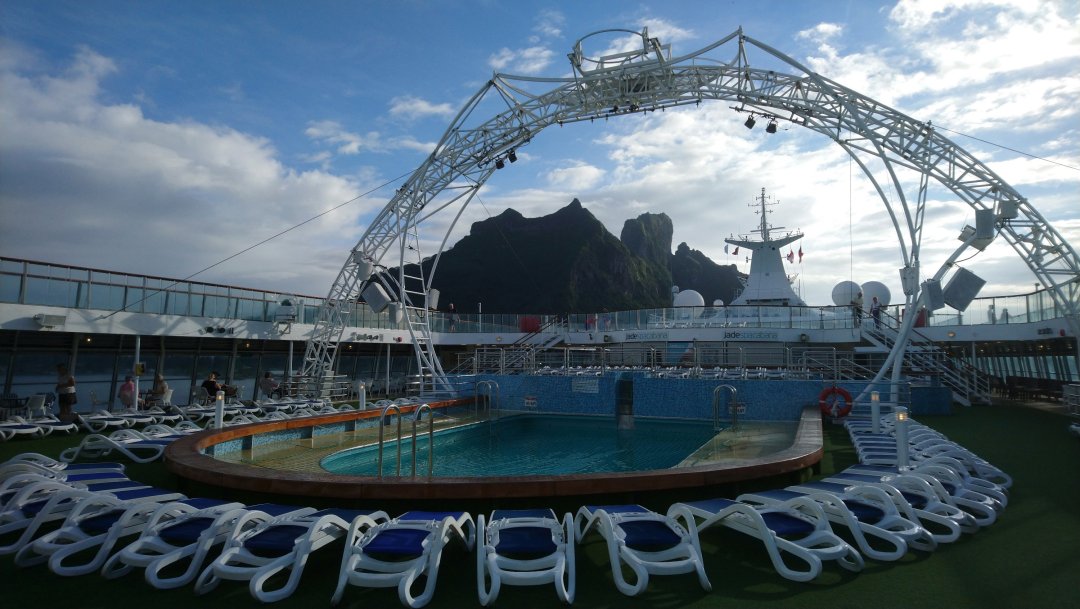
Emerging onto the pool deck for the short walk across to the Plantation Restaurant for breakfast, I was pleased to see Mount Ohue and Mount Pahia, prominent in much of the tourist literature, seemingly rising from the lagoon just a few hundred metres from the bow of Columbus. A promising start, I thought, until it began to drizzle!
Returning to the upper deck after a rather substantial breakfast, we were relieved that the rain had disappeared, leaving only clear skies and white clouds stretching to the horizon. From our vantage point, we could see that Columbus was anchored in the centre of a vast lagoon, with the largest island sweeping around 180 degrees to port, while the rest of the compass was completed by coral reefs and a scattering of smaller islands, seemingly occupied by upmarket hotels. The small port of Viatape, the island’s only town, was easily visible, already bustling in preparation for an influx of dollar-bearing cruisers. We watched as one of the tenders motored towards the dock, no doubt carrying crew members tasked with facilitating the transfer of 1,200 passengers, as well as those among the ship’s staff who had a few hours’ respite and wished to go ashore. Our cabin steward, Shaji, was planning to spend some time on one of the beaches; this was his fourth visit!
We had booked a tour aboard a truck that would follow the island’s main road, stopping at various points for photo opportunities and explanations of the sights. Once again, we were fortunate to have an excellent local guide who brought the island’s history, culture, and geography to life for us. He also played the ukulele and sang beautifully; most Polynesian men, it seems, have a talent for the instrument. It proved to be an ideal way to explore the island within the constraints of a limited schedule.

After transferring to the dock by tender, we boarded our naturally air-conditioned truck, where there was no glass in the windows, where we sat on securely fixed primary school plastic chairs, luxuriously upholstered with a thin cushion. Brilliant! This was the only way to travel. We felt immersed in the island, rather than isolated inside the sanitised metal cocoons that tour operators so often use to shield their customers.
Our first stop was the famous Bloody Mary’s Bar and Restaurant, the island’s first, established in 1976. There was an opportunity to have a drink, and some did, though the small counter selling T-shirts and baseball caps seemed to do a brisker trade. We made several more stops for short walks, explanations, and plenty of photos, but the next iconic pause in our schedule was at Matira Beach, on the southern tip of the island. Supposedly ranked among the world’s top ten beaches, and by some as the best, it was indeed stunning. I would certainly place it in my own top ten, though choosing a single favourite would be impossible. Each beach has its own unique charm, and the surrounding scenery is just one of many factors that make each one special.
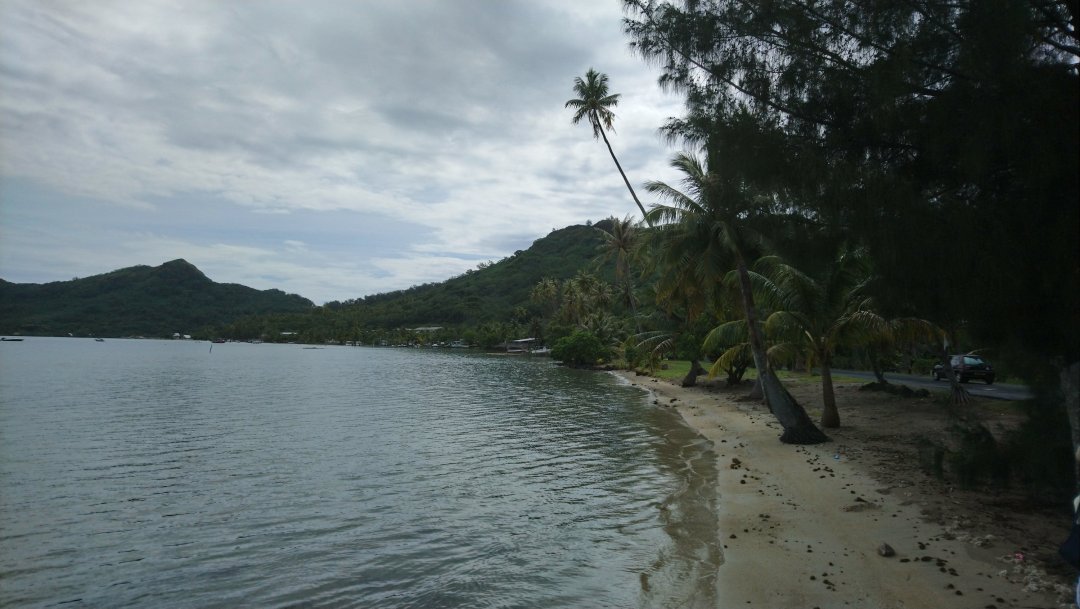
With just one road encircling the island, it was inevitable that we would encounter sights not featured in the tourist brochures. One such stop was the island’s refuse dump and reclamation centre, not exactly picturesque but made interesting by the information and humour of our jovial local guide. Plastic and other recyclable materials are collected and shipped to Tahiti for further processing, though our guide remained sceptical about what actually happens to them. The rest of the waste is managed through a process developed by an Australian company, which, by all accounts and my memory, appears to be quite efficient.
The island was hit hard by the 2008–2010 global recession, and several of its most luxurious hotels collapsed financially and now stand derelict. In this climate, decay quickly takes hold, leaving eerie remnants of once-thriving resorts.
We also passed a stretch of road where the rich and famous once owned, and perhaps still own, properties. Among the names mentioned were Cliff Richard, Tom Cruise, and Pierce Brosnan. However, with space at a premium, the homes were not the grand mansions one might expect but rather modest, well-appointed three-bedroom bungalows.

There was ample evidence of the American occupation during World War II. Beyond the offshore runway, slipways, and battery emplacements, there are also the occasional blonde-haired, blue-eyed locals, a subtle reminder of the island’s wartime past. Bora Bora served as a crucial supply base during the Pacific conflict, and although operations ceased in 1946, many American servicemen chose to stay behind. Having seen the island for ourselves, it is easy to understand why.
We concluded our tour with a visit to Mama Edna’s tie-dye workshop, where we were given a demonstration of the traditional dyeing process. Naturally, there was an opportunity to purchase some of the vibrant fabrics, provided one had faith that the colours wouldn’t run in the wash. As two former primary school teachers who have attempted tie-dyeing many times in the classroom, we knew better!
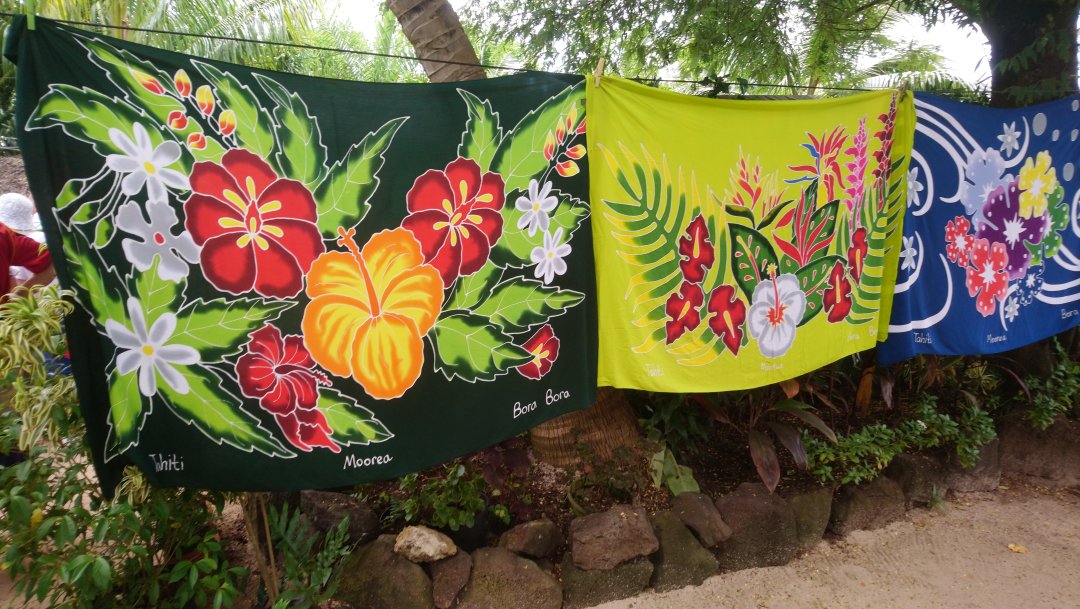
Returning to the dock, we opted not to take the tender back to the ship straight away, choosing instead to explore the small town. It had a handful of restaurants and shops, split fairly evenly between those catering to holidaymakers and those serving the local community. A small market beside the dock also provided a convenient stop for islanders arriving from neighbouring atolls. We visited them all, making a few purchases to support the local economy. Prices were as steep as expected for such a remote location, though not quite as eye-watering as in Tahiti.
I had originally planned to go for a swim before returning to Columbus, but after the combination of heat and shopping, I found myself craving the ship’s air conditioning and an ice-cold drink instead. Once back on board, we cooled off, visited the burger bar, and sat watching the tenders ferry the last of the passengers back to the ship.
Later, we stood at the bow, observing as the anchor was lifted from what must have been a considerable depth. The enormous links wound endlessly into some vast, shadowy recess, the process slow but strangely mesmerising. Towards the end, the crew appeared to encounter some difficulty, reversing the motion several times. I jokingly suggested that they might have caught a whale and were playing it, but, as is often the case, my sense of humour failed to translate, and those around me remained unamused. Ah well, that’s foreigners for you!
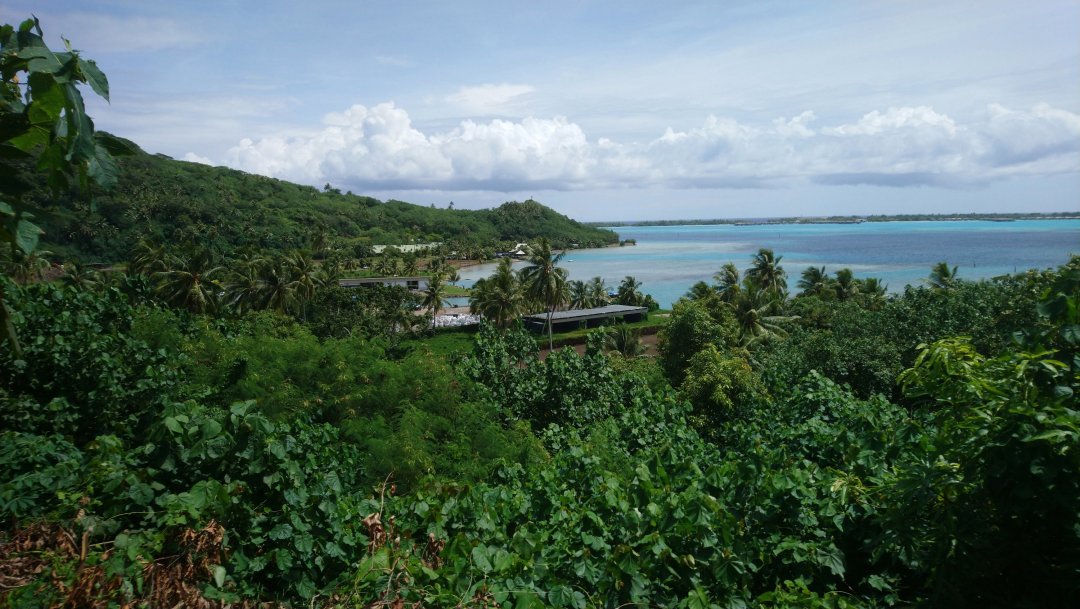
We remained on deck as the Columbus glided out of the lagoon, slipping through the break in the reef just as the sun dipped below the horizon, casting an orange glow over the rapidly greying island. It was a beautifully romantic scene, though perhaps not for the lone canoeist who, in a frantic panic, paddled desperately across our bow. The captain wasted no time in blasting the ship’s horn, urging him to clear the way. If he was seeking an adrenaline rush, he certainly got one, shiploads of it.
Now, we have three days at sea before our next landfall: Tonga.
Would I return to Bora Bora? Absolutely. It is a stunningly beautiful island. As Charlotte aptly put it, it’s like the Maldives, only with mountains. And, much like those atolls, it’s a paradise best suited to those who love being in or under the water or, at the very least, enjoy reading beneath a palm tree in the tropical heat. That certainly describes both Sue and me.
 Palmer Family
Leave a comment